Tower of London
Advendus estimate 15–25 min
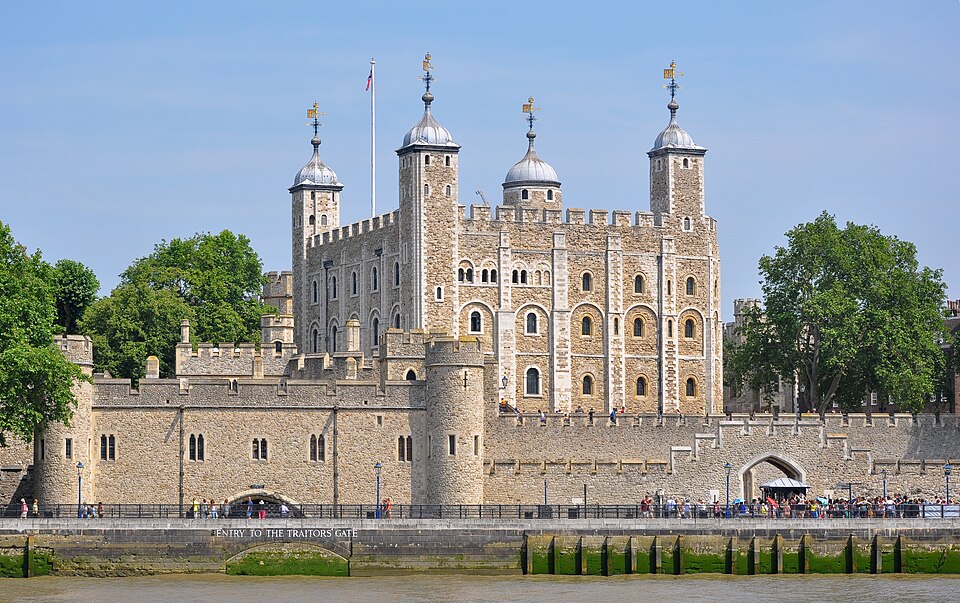
Founded toward the end of 1066 as part of the Norman Conquest, the complex consists of several buildings set within two concentric rings of defensive walls and a moat.
The White Tower, built by William the Conqueror in 1078, is described as the most complete eleventh-century palace in Europe.
Constructed primarily of Kentish ragstone, the White Tower’s upper floor contained a grand hall in the west and a residential chamber in the east.
The inner ward was created during Richard the Lionheart's reign when a moat was dug to the west of the innermost ward.
The inner ward's western curtain wall was later rebuilt by Edward I.
The Tower served as a royal residence early in its history and later functioned as an armoury, treasury, menagerie, and home of the Crown Jewels of England.
From the early 14th century until the reign of Charles II in the 17th century, the monarch traditionally prepared for several nights at the Tower before leading a procession to Westminster Abbey for their coronation.
The Princes in the Tower were housed at the castle in the late 15th century when they mysteriously disappeared.
The zenith of the castle's use as a prison was the 16th and 17th centuries, a role that led to the phrase "sent to the Tower".
Only seven people were executed within the Tower before the world wars of the 20th century.